Mister Flavor: A Bold Script with Retro Charm
Every designer has a go-to collection of fonts—reliable workhorses that get the job done. But sometimes, a project lands on your desk that demands more than competence. It needs charisma. It needs a voice that crackles with energy and personality. That's where a typeface like Mister Flavor enters the conversation. This isn't just another script font; it's a carefully crafted piece of nostalgia, designed to inject a specific kind of spirited, retro joy into your work.
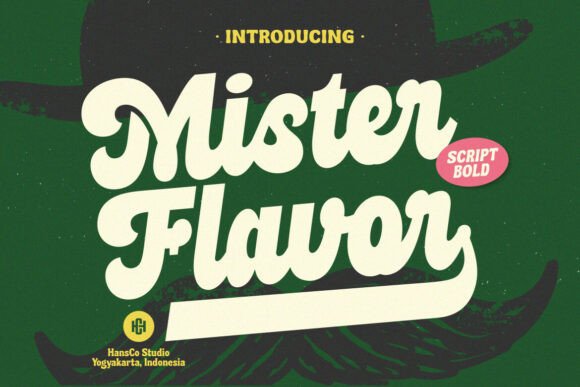
At its core, Mister Flavor is a bold display script with roots firmly planted in the playful, illustrated aesthetic of the 1960s. Think of the hand-lettered logos on vintage soda bottles, the groovy titles on classic album covers, or the inviting signage of a mid-century diner. The font captures that essence with thick, luscious strokes and a rhythmic, flowing baseline. Its characters have a substantial weight, giving them a confident presence on the page, while subtle irregularities in the curves maintain that crucial handmade feel. This combination of boldness and warmth is what makes it so effective—it's assertive without being aggressive, friendly without being childish.
Where This Typeface Truly Shines
The true value of a creative font like Mister Flavor is measured by its application. It's not a universal solution for body copy, but as a display font, its strengths are magnified in specific scenarios. Imagine it shaping the logo design for an independent coffee roaster or a boutique record shop. The typeface's inherent personality does half the branding work, instantly communicating a vibe of authenticity, craft, and a touch of whimsical rebellion against the sterile.
Beyond the primary logo, consider its role in broader brand identity systems. Mister Flavor can become the star of packaging design for artisanal goods, the headline font for a blog celebrating vintage culture, or the driving force behind eye-catching social media graphics. Its retro charm makes it perfect for creating editorial design layouts with a thematic focus, like a feature article on retro fashion or a cookbook with a nostalgic twist. For web design, it can be used strategically for hero sections, pull quotes, or call-to-action buttons to create focal points that guide the user's eye and establish an immediate emotional tone.
Practical Guidance for Using a Bold Script
Integrating a typeface with this much character requires a thoughtful approach. First, font pairing is critical. The goal is balance. Pair Mister Flavor with a clean, simple sans serif font or a classic serif font for any supporting text. This contrast ensures readability for paragraphs while allowing the script's personality to dominate headlines. Avoid pairing it with other ornate or handwritten fonts, as this creates visual chaos.
Second, consider the context of your project. Evaluate if the font's playful, retro personality aligns with the message. It's a superb premium font for brands targeting audiences who appreciate nostalgia, craftsmanship, or a fun, energetic aesthetic. It might not be the right fit for a law firm's annual report, but it's perfect for a festival poster, a children's product line, or a food truck's menu.
Finally, always test the font in your actual design environment. Check its readability at smaller sizes, especially for packaging design or social media graphics viewed on mobile devices. Review the full character set—look for stylistic alternates, ligatures, and swashes that can add unique flair to headlines. And, as with any commercial font, ensure the licensing fits your project's needs, whether for digital, print, or merchandise.
Mister Flavor is more than just a design asset; it's a tool for storytelling. By understanding its visual language and applying it with intention, you can leverage its spirited charm to create work that doesn't just look good, but feels genuinely engaging and memorable. It's the missing ingredient for projects that need a dash of zest and a whole lot of personality.