A Tangy Twist for Your Typography: The Pickle Gherkins Food Font
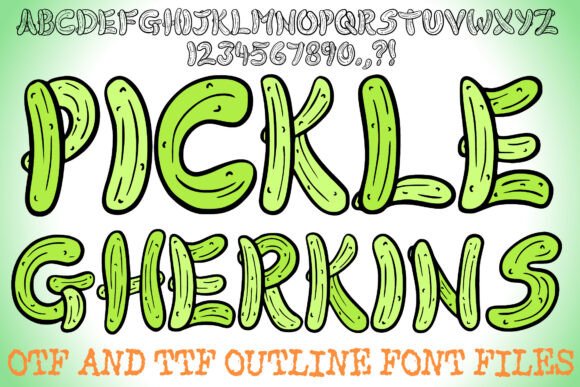
Finding a typeface that genuinely captures a specific flavor or texture can be a challenge. Most decorative fonts rely on abstract shapes or generic themes. The Pickle Gherkins food font takes a different approach, turning each character into a recognizable, hand-drawn gherkin. This isn't just a novelty; it's a highly specific design asset with a clear personality. Each letter and number is crafted to mimic the organic, bumpy texture of a real cucumber, rendered in a vibrant green gradient. The result is a display typeface that feels both playful and authentic, perfect for projects that need a distinct, sour-but-sweet character.
Visual Style and Personality
The core appeal of the Pickle Gherkins font lies in its meticulous realism. The designers avoided a cartoonish look, focusing instead on the natural curves and irregular surfaces of a freshly picked pickle. This gives the typeface an organic, almost tactile quality. The outlines are clean, making the characters legible even at smaller sizes, while the detailed textures—bumps, spots, and subtle shading—come alive in larger applications. It's a premium font that prioritizes character over minimalism, making it an ideal creative font for branding that wants to stand out.
Unlike a standard sans serif font or serif font, the Pickle Gherkins typeface doesn't blend into the background. It commands attention. This makes it unsuitable for body text but incredibly effective for headlines, logos, and short bursts of text where personality is paramount. Its style leans into the world of handwritten font and script font aesthetics, but with a unique, food-based twist that sets it apart in any collection of design assets.
Where This Font Truly Shines
Understanding where to deploy the Pickle Gherkins font is key to using it effectively. Its bold, thematic nature makes it a specialist tool rather than a general-purpose typeface. Here’s where it finds its best applications:
- Food-Related Branding: This is its natural habitat. Use it for logo design for artisan pickle brands, BBQ sauce companies, deli shops, or food truck identities. It instantly communicates a fun, handcrafted, and flavorful brand personality.
- Marketing and Social Media: Create scroll-stopping social media graphics for food bloggers, recipe promotions, or summer event announcements. Its visual punch is perfect for Instagram stories, Facebook ads, or Pinterest pins that need to grab attention quickly.
- Packaging and Editorial Design: On product labels for condiments, snacks, or gourmet goods, this font can add a layer of whimsy and authenticity. In editorial design, it works well for chapter titles in a cookbook or feature headlines in a food magazine.
- Digital and Web Design: Use it sparingly for website headers, hero section callouts, or special promotional banners on a restaurant’s online menu. It adds personality without overwhelming the user experience when paired with a clean sans serif font for body copy.
- Personal and Commercial Projects: The font’s versatility extends to crafting. Design fun stickers, party invitations for a summer BBQ, quirky kitchen decor prints, or personalized apron designs. Its commercial licensing allows for a wide range of profitable uses.
Making the Most of Pickle Gherkins in Your Projects
Adopting a specialized typeface like this requires some strategic thinking to ensure it enhances rather than hinders your design. Here’s practical guidance for integrating it into your workflow.
Evaluating Project Fit
Ask yourself: does the project’s tone match the font’s personality? The Pickle Gherkins font is playful, informal, and slightly retro. It’s perfect for a casual dining brand or a humorous marketing campaign but would feel out of place on a law firm’s website. Consider your brand identity and target audience. This font resonates with adults who appreciate nostalgia, humor, and artisanal quality.
Testing Font Pairings
Because it’s a display font, pairing is crucial. Avoid pairing it with other decorative or script fonts, which can create visual chaos. Instead, combine it with a simple, neutral typeface. A clean sans serif font like Montserrat or a sturdy serif font like Georgia makes an excellent companion, handling all the body text and providing a visual rest. This contrast establishes a clear visual hierarchy, where the gherkin letters do the heavy lifting for impact, and the secondary font ensures readability.
Readability and Application
Remember, this is an outline font best used at larger sizes. At small point sizes, the intricate details can become muddy, reducing readability. Test it thoroughly in your intended medium—what looks great on a poster might not translate well to a small mobile screen. Use it for headlines, logos, or single words where clarity of shape is more important than dense text flow.
Understanding the Included Styles
The package includes both OTF and TTF files, ensuring broad software compatibility. The font contains capital letters, numbers, and basic punctuation (. , ? !). This is typical for a decorative font of this nature, as its primary use is for impactful, short-form text. It’s not designed for long sentences, but its character set is perfectly suited for its intended purpose.
In the landscape of modern typography, the Pickle Gherkins font is a standout example of how a typeface can embody a complete concept. It’s more than just letters; it’s a design tool that injects instant personality and theme. By using it thoughtfully in the right contexts, you can transform ordinary designs into memorable, engaging experiences that truly resonate with your audience. It’s a “big dill” for any creative looking to add a unique, flavorful asset to their toolkit.